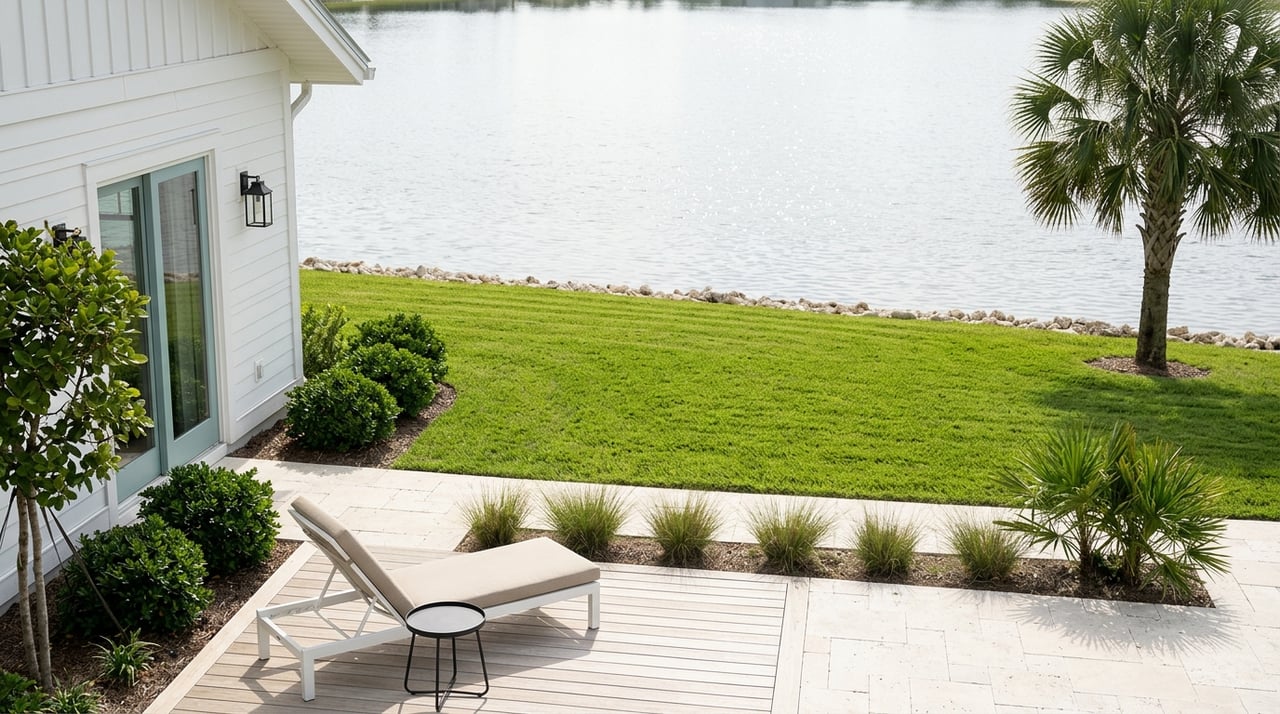
If you are dreaming about a home with fairway views or water just beyond your lanai, Plantation Bay likely checks a lot of boxes. It offers a private, amenity-rich setting with golf, walking paths, club facilities, and scenic homes that appeal to both full-time residents and second-home buyers. The key is knowing that in Plantation Bay, a great view is only part of the buying decision. You also need to understand fees, future development, lot placement, and day-to-day livability. Let’s dive in.
Why Plantation Bay Draws Scenic-Home Buyers
Plantation Bay Golf & Country Club is known for lifestyle appeal as much as real estate. The community is described as a golf-cart community with three golf courses totaling 45 holes, two clubhouses, two community parks, and miles of paths. It is also located just off I-95, with nearby beaches about ten minutes away and Daytona Beach International Airport about twenty minutes south.
For many buyers, that combination matters. You get a gated community setting, strong amenity appeal, and convenient access to the coast and travel routes. If you want a home that feels like a retreat but still keeps you connected to the area, Plantation Bay stands out.
Golf and Lakefront Homes Cost More
In Plantation Bay, scenic lots usually come with a premium. Current listing snapshots show golf-course-view properties ranging from a $249,900 condo to a $3.3 million home, while waterfront listings range from $264,900 to $1.2495 million. That spread tells you right away that not all views are priced the same.
The broader community market appears lower than many scenic listings. One market snapshot shows a median listing price of $449,900, while another shows about $512,400. In simple terms, you are often paying extra for view quality, lot position, home size, age, and whether the property is new construction or resale.
What You Are Really Paying For
A golf or lakefront home in Plantation Bay is about more than the lot line. The community’s amenity package includes 45 holes of championship golf, two upscale clubhouses, tennis and pickleball, a pool pavilion, nature parks, and walking trails. The Founders Club is described as a 40,500-square-foot golf and lifestyle center, and some dining areas overlook golf and lake scenery.
That means buyers are often purchasing both a home and a lifestyle setting. Even if club membership is optional, the surrounding amenities still shape the feel of the community and often influence demand for scenic homes.
Check View Longevity First
A beautiful view today does not always guarantee the same view years from now. More than half of Plantation Bay’s 3,600 acres is described as undeveloped, and a 2025 county agenda item shows a request to extend buildout through January 22, 2048. That makes future land use a major part of your due diligence.
If you are considering a golf or lakefront property, ask what is behind the home, beside it, and across the view corridor today. Then ask what is approved there for the future. A preserve edge, a built-out street, and a future phase can create very different long-term experiences.
Understand the Daily Reality of Golf-Edge Living
Golf course views are attractive, but course-edge homes are part of an active recreational setting. Plantation Bay’s club rules make clear that the golf courses and cart paths are working facilities with regular play, cart traffic, and course management activity. That matters more than many buyers realize during a quick showing.
A home near a tee box, green, cart path, practice area, or maintenance route may feel different from one tucked farther away. Privacy, noise, and how often your view is interrupted can vary from lot to lot. This is one reason I always recommend walking the lot carefully and paying attention to what surrounds the home, not just the water or fairway beyond it.
Lakefront Homes Need Extra Water Questions
If you are buying on or near water, drainage and flood planning should be part of your decision from the start. FloodSmart notes that most homeowners insurance does not cover flood damage and that flood insurance is separate coverage. That makes insurance review and property-specific investigation especially important for lakefront or low-lying homes.
During showings and inspections, focus on practical questions. Ask about prior water intrusion, how the lot drains after heavy rain, and whether the lanai, screens, and landscaping are set up to handle standing water or irrigation overspray. A water view is a lifestyle feature, but drainage performance is a ownership issue.
HOA and Club Fees Are Not the Same
One of the biggest mistakes buyers can make in Plantation Bay is assuming all fees are bundled together. They are not. The HOA and the club operate as separate layers, and that distinction matters to your monthly budget and your expectations.
The HOA site says the community is governed by a master association plus sub-associations. Separately, the club says membership is optional, that a one-time initiation fee applies when you join, and that members must meet an annual food-and-beverage minimum. The club also states that membership is a revocable use privilege rather than an ownership interest, and that membership categories, dues, trail or cart fees, and food-and-beverage minimums may change.
Before you write an offer, make sure you review more than the listing sheet. You will want the current HOA information, any sub-association rules, and the current club membership plan if you think you may join.
Golf Cart Rules Matter More Than You Think
Plantation Bay is described as a golf-cart community, and that is part of the lifestyle appeal for many buyers. The HOA information says residents may own carts for use on the course or when visiting friends and attending community activities. Still, buyers should not assume every address has the same practical setup or use rules.
Ask whether a private golf cart is allowed at the specific property and what registration rules apply. Also check how easy it is to get from the home to club features and other parts of the community by cart. In a large master-planned setting, convenience can vary by location.
Smart Questions to Ask Before You Buy
A scenic home is easiest to enjoy when you understand the details up front. If you are touring golf or lakefront homes in Plantation Bay, keep these questions handy:
- What is on the other side of the view today?
- What is approved behind or beside the lot in the future?
- How close is the home to a tee box, green, cart path, practice area, or maintenance route?
- Are there drainage or standing-water issues after heavy rain?
- What are the current HOA fees?
- If I want club access, what are the current dues, initiation fees, trail or cart fees, and food-and-beverage minimums?
- Is a private golf cart allowed at this address, and what registration rules apply?
- Is this address located in unincorporated Flagler County, and who are the service providers for this parcel?
That last question is especially important because Plantation Bay appears in unincorporated Flagler County service areas, so buyers should verify the exact parcel jurisdiction and service setup for each address.
How to Buy More Confidently
The best Plantation Bay purchase is not always the house with the widest water view or the longest fairway backdrop. It is the one that matches your budget, your lifestyle, and your comfort level with fees, activity, and future surroundings. A slightly different lot orientation or a home set farther from active course areas can sometimes give you a better everyday experience.
This is where local guidance makes a difference. When you compare scenic lots carefully, ask better due diligence questions, and look past the listing photos, you can avoid surprises and buy with much more confidence.
If you are weighing golf-view or lakefront homes in Plantation Bay, Geri Davis can help you compare locations, review the practical tradeoffs, and narrow in on the right fit for your goals.
FAQs
What should you check before buying a golf-view home in Plantation Bay?
- You should check the home’s distance from tees, greens, cart paths, practice areas, and maintenance routes, along with what is behind or beside the lot now and what may be built there later.
What should you verify before buying a lakefront home in Plantation Bay?
- You should verify flood zone, drainage performance, any prior water intrusion, and whether the outdoor areas are designed to handle standing water or irrigation overspray.
Are Plantation Bay club memberships required when buying a home?
- No. The club says membership is optional, but buyers should still review current initiation fees, dues, trail or cart fees, and food-and-beverage minimums if they plan to join.
Why do golf and waterfront homes in Plantation Bay often cost more?
- These homes often command a premium because buyers are paying for scenic lot placement, lifestyle appeal, and access to a community known for golf, club amenities, and outdoor recreation.
What makes future development important for Plantation Bay buyers?
- Plantation Bay still has undeveloped acreage, and the buildout horizon may extend for years, so buyers should confirm whether a current view is backed by preserve land, existing homes, or future phases.